Divine Feminine archetypes: Why the Divine Feminine Needs Reframing
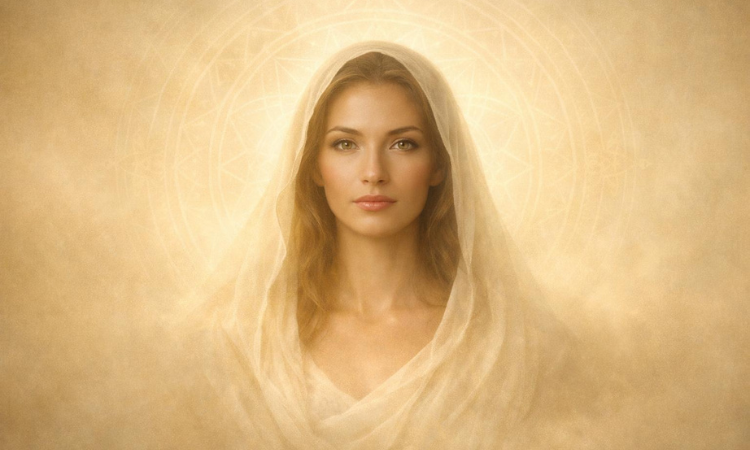
The Divine Feminine has become one of the most misunderstood ideas in modern spirituality. It is often reduced to symbolism, aesthetic imagery, or emotional softness. Yet in its original context, the feminine was never decorative. It was functional. It described a way consciousness organizes itself when it becomes receptive, intuitive, and capable of deep transformation.
Ancient traditions did not speak of the feminine as a belief system. They recognized it as a mode of perception. When awareness turns inward, listens rather than asserts, and allows reality to reorganize itself, the feminine principle is active. This is why the Divine Feminine appears everywhere once you know how to look.
Across cultures, this principle was expressed through different lineages, practices, and languages. Over time, these expressions took archetypal form. Not because they were imagined, but because human experience tends to crystallize around recognizable inner patterns. These patterns are what we now call archetypes.
Understanding Divine Feminine archetypes means returning to these patterns as lived capacities, not abstract ideals.
The Feminine as a Mode of Consciousness
Before archetypes appear, there is a more fundamental distinction to understand. Most spiritual traditions recognized two complementary movements of consciousness. One is outward, directive, and structuring. The other is inward, receptive, and transformative.
The feminine belongs to the second movement.
This does not mean passive or weak. Receptivity in ancient teachings was associated with depth, patience, and precision. Transformation does not happen through force. It happens through space. The feminine principle creates that space.
When awareness stops trying to control outcomes, something else becomes possible. Insight emerges. Integration happens. Old structures dissolve without violence. This is why feminine wisdom was often guarded, initiatory, and practiced rather than preached.
Over centuries, cultures described this inner movement using different symbols. Some spoke of wisdom figures. Others of priestesses, yoginis, mystics, or seers. Beneath the surface differences, the same inner capacities were being named.
These capacities eventually formed a recognizable set of archetypes.
Why Archetypes Appear Across Traditions
Archetypes are not cultural inventions. They are patterns that repeat because human consciousness develops in consistent ways. Whenever people turn inward with enough seriousness, similar stages appear. Similar challenges arise. Similar forms of insight stabilize.
This is why civilizations that never met still described comparable feminine figures. The language differed, but the inner function was the same.
Rather than treating these figures as mythological characters, it is more accurate to see them as mirrors. Each archetype reflects a specific capacity of awareness coming online. Clarity. Stillness. Alignment. Devotion. Embodiment. Fearless transformation.
Taken together, these expressions form a map. Not a linear path, but a constellation. Some capacities awaken early. Others emerge later. None stand alone.
The value of working with Divine Feminine archetypes lies in recognizing which capacities are active, which are dormant, and which are being avoided.
The Twelve Faces as Inner Capacities
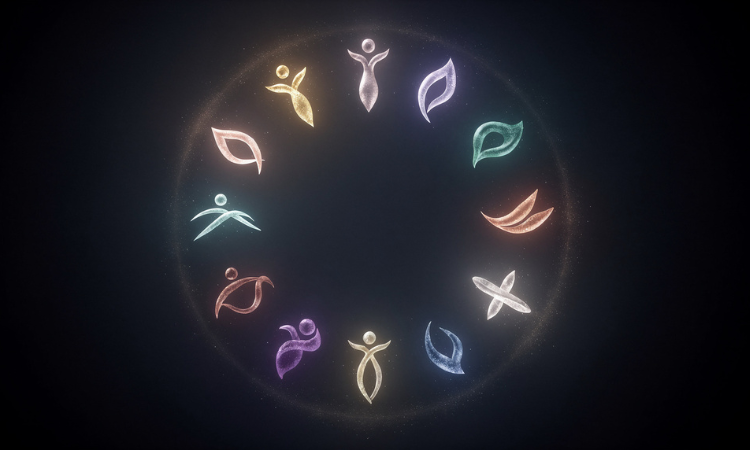
Across the world’s major wisdom traditions, twelve core feminine expressions consistently appear. Each one corresponds to a distinct way consciousness stabilizes when it matures inwardly.
At a high level, these twelve faces can be understood as follows:
The Sage represents clarity and discernment.
The Renunciant embodies peace through letting go.
The Alchemist reveals flow and effortless harmony.
The Priestess holds truth, balance, and alignment.
The Adept masters inner creation and coherence.
The Gnostic awakens direct inner knowing.
The Lover opens the heart through devotion.
The Contemplative stabilizes silence and interior union.
The Earth-Seer restores embodiment and belonging.
The Zen Master refines simplicity and presence.
The Witness recognizes spacious awareness.
The Sky-Dancer activates fearless transformation.
These are not ideals to imitate. They are capacities to recognize. Every person expresses all twelve at different moments, often unconsciously.
The work begins when awareness becomes intentional.
Understanding Divine Feminine archetypes in this way removes the need for belief. Nothing here requires adopting a new identity. What matters is perception.
Why This Framework Matters Today
Modern life emphasizes speed, control, and output. These qualities strengthen outward-moving consciousness but weaken inner integration.
As a result, many people feel fragmented even while remaining productive.
The feminine archetypal framework restores balance. It does not reject action. It contextualizes it. When inner capacities mature, action becomes cleaner.
Decisions align more naturally. Burnout decreases. Insight deepens.
This is why ancient traditions treated feminine wisdom as foundational rather than supplementary.
Without it, knowledge remains abstract. With it, understanding becomes embodied.
Working with these archetypes also prevents spiritual bypassing. Each face reveals both a strength and a responsibility. Clarity without compassion hardens. Devotion without discernment blinds. Stillness without embodiment disconnects.
The map only works when all faces are allowed to speak.
How This Series Will Unfold
This article serves as the gateway. Each subsequent piece will explore one archetype in depth, tracing its origin, its inner function, and its practical expression in modern life. The aim is not instruction, but recognition.
Each archetype will be treated as a living capacity rather than a historical curiosity. Practices will remain simple. Language will stay grounded. The focus will always return to direct experience.
This series draws from The Twelve Faces of the Divine Feminine, a contemplative work offered through AwakenWords as a foundational text for deeper exploration.
The journey begins with clarity. It begins with the Sage.

✅ FAQ SECTION
FAQ 1
What are Divine Feminine archetypes?
Divine Feminine archetypes are recurring inner patterns of awareness found across spiritual traditions. They represent capacities such as clarity, stillness, devotion, and transformation rather than mythological figures.
FAQ 2
Are Divine Feminine archetypes associated with gender?
No. These archetypes describe modes of consciousness available to all human beings, regardless of gender. They reflect how awareness organizes itself inwardly.
FAQ 3
Why do different cultures describe similar feminine archetypes?
Because human consciousness evolves in consistent ways. Independent traditions recognized the same inner capacities and expressed them using different symbols and languages.
This article draws from The Twelve Faces of the Divine Feminine, a contemplative ebook available on AwakenWords.
1 thought on “Discover the Twelve Divine Feminine Archetypes”