

Spiritual Books — When a Book Becomes a Threshold
Some books inform. Others awaken. A rare few alter the structure of perception itself. These are not merely spiritual books in the commercial sense. They are works that shift the way reality is interpreted, experienced, and lived.
Across centuries and cultures, certain texts have functioned less as literature and more as catalysts. They do not offer belief systems to adopt or techniques to master. Instead, they destabilize inherited assumptions. They invite readers to question identity, time, divinity, and the boundaries of the possible.
What distinguishes a consciousness-shifting work from the thousands of inspirational titles published each year? First, endurance. True spiritual classics do not depend on trend cycles. They survive criticism, reinterpretation, and cultural shifts. Second, experiential depth. They point inward rather than outward. Third, re-readability. Each encounter reveals something new because the reader has changed.
The following works meet those criteria. Each one, in its own way, has quietly altered the trajectory of spiritual thought and personal awakening. Some arrived through mystery. Others through scholarship. All continue to ripple through modern consciousness.

1. Life and Teaching of the Masters of the Far East — Baird T. Spalding
Few spiritual books have generated as much quiet controversy and sustained devotion as this series. First published in 1924, it presented a radical proposition: that human beings are not separate from divinity but are direct expressions of it.
The narrative describes encounters with Himalayan Masters who embody higher laws of consciousness. Skeptics questioned the historicity of the expedition. Yet the endurance of the work cannot be explained by story alone. Its transformative power lies in its insistence that inner mastery is not reserved for saints or ascetics but is available to all.
The text shifts consciousness by removing intermediaries. God is not distant. Miracles are not supernatural. Divinity is not deferred. For many readers, this realization alone reorients life from striving to recognition.

2. The Impersonal Life — Joseph Benner
Published anonymously in 1914, this small book speaks in the voice of the Divine within the reader. Its language is direct, intimate, and uncompromising. Rather than offering spiritual philosophy, it dissolves the illusion of separation.
The book’s impact stems from its structural boldness. It does not describe God; it speaks as God. This rhetorical move collapses distance and forces confrontation with the possibility that the inner voice of awareness is not personal at all.
Readers often report that the text feels less like reading and more like remembering. Its simplicity hides profound metaphysical implications: identity is not the body or personality but the awareness behind them. That shift alone alters perception permanently.
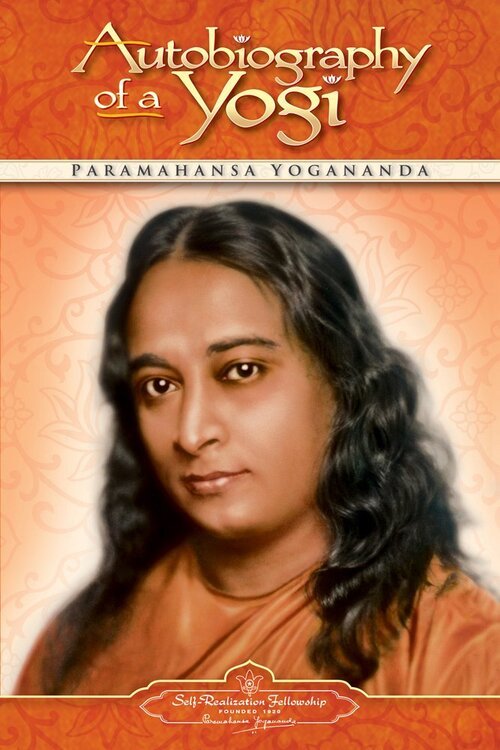
3. Autobiography of a Yogi — Paramahansa Yogananda
This 1946 classic introduced millions in the West to the spiritual traditions of India. Unlike purely philosophical works, it blends biography with mystical experience, creating accessibility without dilution.
Yogananda’s narrative reframed spirituality as lived experience rather than inherited belief. Miracles are presented as natural extensions of consciousness development. Meditation becomes a science of inner exploration rather than a ritual.
The book’s influence extends far beyond its readership. It helped normalize yoga, meditation, and Eastern mysticism in Western culture. More importantly, it presented enlightenment as attainable, not abstract.
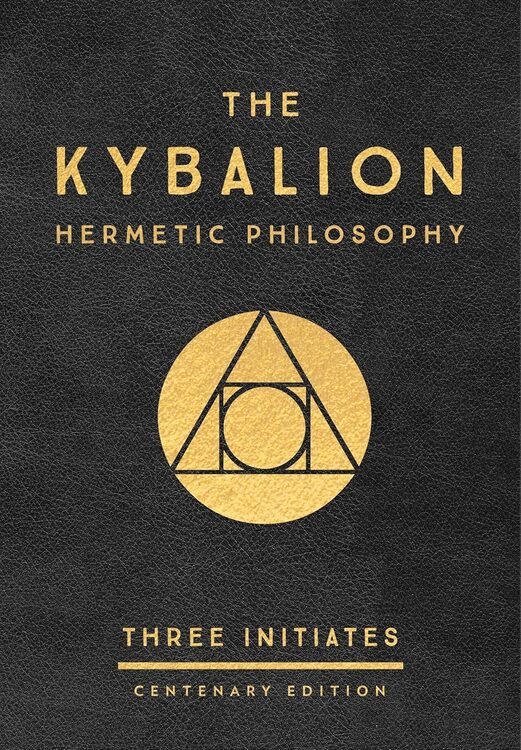
4. The Kybalion — The Three Initiates
First published in 1908, this concise text distills Hermetic philosophy into seven principles. Its power lies in clarity. Concepts such as mentalism, polarity, and correspondence provide a structured lens through which reality can be interpreted.
Unlike devotional works, this book appeals to the rational mind while subtly expanding it. It suggests that consciousness precedes matter and that understanding universal laws grants freedom from reactive living.
Its endurance proves that spiritual insight need not be sentimental. It can be precise, almost scientific, while still pointing toward transcendence.
5. The Power of Now — Eckhart Tolle
Modern yet timeless, this work reintroduced presence as the foundation of awakening. Tolle’s central claim—that psychological suffering arises from identification with thought—resonated globally.
The book’s transformative quality lies in its immediacy. No doctrine is required. No lineage must be accepted. Awareness of the present moment becomes the gateway to liberation.
While critics dismissed it as simplistic, millions found direct relief from mental turbulence. Its influence demonstrates that ancient truths, when expressed clearly, retain their potency.
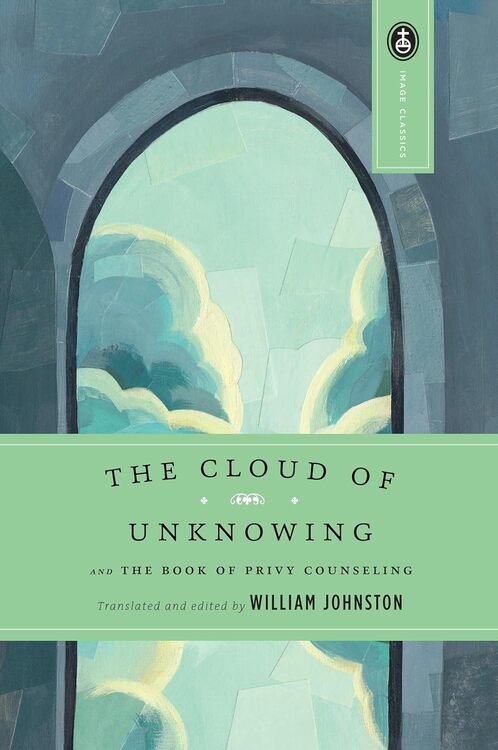
6. The Cloud of Unknowing — Anonymous (14th Century)
This medieval Christian mystical text emphasizes surrendering intellectual understanding in favor of direct experiential union with the Divine.
Its radical instruction is simple: abandon conceptual knowledge and enter the “cloud” of unknowing. In doing so, the seeker encounters truth beyond language.
Though centuries old, the text challenges modern dependence on analysis. It affirms that ultimate reality cannot be grasped but only entered.
7. The Dhammapada — Attributed to the Buddha
Composed of concise verses, this foundational Buddhist text distills the teachings of the Buddha into accessible aphorisms. Its clarity is deceptive. Each line invites deep contemplation.
The shift it offers is profound: suffering arises not from circumstance but from attachment and ignorance. Liberation is available through awareness and disciplined insight.
Its endurance across millennia attests to its structural truth. It speaks as clearly today as it did in ancient India.
8. The Gospel of Thomas
Discovered among the Nag Hammadi texts in 1945, this collection of sayings attributed to Jesus presents a radically interiorized spirituality.
The kingdom is described not as future salvation but as present awareness. Authority shifts from institution to insight. The text challenges traditional frameworks while reaffirming inner divinity.
Its rediscovery altered theological discourse and reignited interest in early mystical Christianity.
9. The Tao Te Ching — Lao Tzu
Perhaps one of the most elegant spiritual books ever written, this ancient Chinese text articulates the principle of effortless alignment with the Tao.
Its paradoxical verses undermine rigid thinking and celebrate simplicity. Power is redefined as softness. Control dissolves into flow.
The text reshapes consciousness by demonstrating that harmony arises not through force but through attunement.

The Pattern Behind All Transformative Spiritual Books
When examined closely, truly transformative spiritual books reveal a consistent architecture. They differ in language, culture, and historical context, yet the structural principles remain strikingly similar. Their power does not come from novelty. It comes from alignment with enduring laws of consciousness.
First, they decentralize the ego. None of these works strengthen identity as something to perfect or defend. Instead, they gently dismantle the assumption that the self is limited to personality, biography, or narrative. Whether through the impersonal voice of divine awareness, the dissolution of thought in presence, or the surrender into unknowing, each text loosens identification with the constructed self.
Second, they relocate authority inward. Transformative spiritual books do not build dependence. They do not insist on institutional loyalty, ritual compliance, or ideological conformity. Even when written within religious traditions, their core message points toward direct experience. The reader is invited to verify truth internally rather than adopt it externally.
Third, they collapse the distance between the human and the divine. In different language, each work challenges the notion of separation. Divinity is not postponed to an afterlife, nor reserved for exceptional beings. It is presented as inherent, immediate, and accessible through awareness. This shift alone alters how reality is interpreted.
Fourth, they transcend time without losing relevance. Works that merely reflect cultural conditions eventually age. Transformative texts operate on a deeper layer. Their language may be ancient, yet their insight remains intact because it addresses structures of perception rather than social trends. They speak to what does not change in human experience.
Transformative Spiritual Books
Fifth, they invite practice without prescribing dependency. While some include disciplines—meditation, contemplation, ethical living—the practice serves as a doorway rather than a system to master. The emphasis remains on realization, not technique. Readers are guided toward simplicity rather than complexity.
Sixth, they produce experiential recognition. The most telling marker of a consciousness-shifting book is the reader’s response. There is a moment when something feels remembered rather than learned. Insight arises not as information acquired but as clarity uncovered. That recognition cannot be manufactured through persuasion. It occurs when language resonates with lived truth.
Finally, these books endure because they do not compete. They do not argue aggressively against opposing views. They state what they see with calm conviction and allow time to test them. Controversy may surround them, yet they persist because their relevance is not dependent on approval.
Taken together, this pattern reveals why certain spiritual books survive while countless others fade. They do not rely on personality, trend, or marketing force. They operate as mirrors. When a reader is ready, they reflect back a deeper structure of awareness that was always present.
That is what changes consciousness—not new belief, but restored perception.

Spiritual Books — When the Book Becomes a Mirror
Transformative spiritual books do not compete for attention. They wait. Their relevance does not depend on era, institution, or cultural momentum. They endure because they address what remains constant beneath shifting conditions.
What unites the works explored here is not doctrine, geography, or tradition. It is structural clarity. Each dissolves separation. Each redirects authority inward. And each reduces complexity rather than adding to it. And each survives because it speaks to awareness itself, not to ideology.
When such a book finds a reader, the effect is subtle but irreversible. Perception reorganizes. Assumptions loosen. The center of gravity shifts from external validation to inner coherence. Nothing dramatic may occur outwardly, yet something fundamental changes in how life is interpreted.
That is why these spiritual books endure. They do not provide something new. They remove what obscures what has always been present.
And once seen clearly, consciousness does not return to its previous configuration.
If this exploration of spiritual books resonates, you may also find deeper insight in our study of Baird T. Spalding and the Masters of the Far East.