

Forgotten Spiritual Teachers — Why the Deepest Teachers Are Often the Quietest
Not every spiritual teacher becomes a global name. Some do not build institutions. Others leave behind no movement, no marketing, and no carefully managed legacy. Yet their words continue to move through generations, quietly reshaping lives from the inside out.
This pattern appears again and again across spiritual history. The most visible voices are not always the most transformative. In many cases, the deepest teachings arrive through figures who remain partially hidden—misunderstood in their own time, overlooked by the mainstream, or passed from reader to reader without noise.
That quietness is not weakness. It is often a sign of a different kind of power.
Forgotten spiritual teachers tend to speak from direct realization rather than performance. They do not rely on charisma alone. They do not package truth for easy consumption. Instead, they offer language that unsettles the false, clarifies the essential, and awakens something already present within the reader.
This is why their influence (or influential spiritual authors) can outlast fame.
While popular figures often reflect the needs of a moment, timeless teachers address structures of consciousness that do not change. Their insights remain relevant because they speak to identity, awareness, suffering, divinity, and inner freedom at the deepest level. Even when their names fade, their transmissions endure.
The forgotten spiritual teachers explored in this article belong to that category. Some were mystics. Some were philosophers. Others wrote anonymously or lived in near obscurity. Yet each one helped shape the inner landscape of modern spirituality in ways still felt today.
To understand them is not simply to recover neglected names. It is to see how real spiritual influence often moves: quietly, steadily, and far beyond the reach of public attention.
## Section 1 — What Makes a Spiritual Teacher Timeless Without Fame?
Fame and depth rarely move together for long. Public recognition depends on timing, culture, and visibility. Timeless influence depends on something else entirely. It rests on whether a teaching continues to awaken insight after trends have passed.
Forgotten spiritual teachers endure because they address what remains constant in human experience. They speak to fear, identity, suffering, awakening, and the search for what is real. These questions do not disappear with historical change. As a result, teachings rooted in them retain their force across centuries.
Another important quality is interior authority. Quiet teachers do not usually build their influence through spectacle. They do not depend on mass attention to validate their insight. Instead, their words carry the weight of direct realization. Readers sense that they are encountering something lived rather than assembled.
This gives their work unusual durability.
Spiritual Teachers
A timeless teacher also reduces rather than complicates. Many spiritual systems become dense with terminology, hierarchy, and interpretation. However, the teachers who remain powerful over time tend to move in the opposite direction. They strip away excess. And also they point inward. They bring the reader closer to direct experience.
Their obscurity can even strengthen their influence. Without a large public persona to dominate the message, the teaching itself becomes central. Personality recedes. Transmission remains. In that sense, forgotten spiritual teachers often feel strangely intimate. They reach the reader without noise.
This does not mean every obscure teacher is profound. Obscurity alone proves nothing. Yet when a quiet teaching survives through generations, without institutional force or popular branding, it usually does so because it meets a genuine inner need.
That is the pattern behind the names that follow. Their lives differed. Their traditions varied. Even so, each one left behind more than ideas. They left a form of clarity that continues to reshape consciousness from within.
## Section 2. Forgotten Spiritual Teachers
## 1. Baird T. Spalding
Baird T. Spalding remains one of the most enigmatic figures in modern spiritual literature. His name is known mainly through *Life and Teaching of the Masters of the Far East*, a series that introduced countless readers to the possibility of inner divinity, conscious mastery, and the higher capacities of human life. Yet the man himself remains surrounded by uncertainty.
Biographical details are sparse and often disputed. Critics questioned the historicity of the expedition he described. Supporters focused less on documentation and more on the transformative force of the teachings. Decades later, that debate continues. So does the quiet influence of the books.
What makes Spalding important is not simply the mystery around him. It is the radical nature of what he transmitted. His work insisted that the human being is not separated from God, but is a living expression of divine life. Miracles were not presented as interruptions of nature, but as demonstrations of deeper laws available through awakened consciousness.
This message reached readers without institutional endorsement and without significant promotion. The books moved hand to hand, often in silence, awakening something that conventional religion had obscured.
Spalding belongs among forgotten spiritual teachers because his influence far exceeds his public profile. His name never became mainstream. His work, however, altered the spiritual imagination of thousands who encountered it at the right moment.
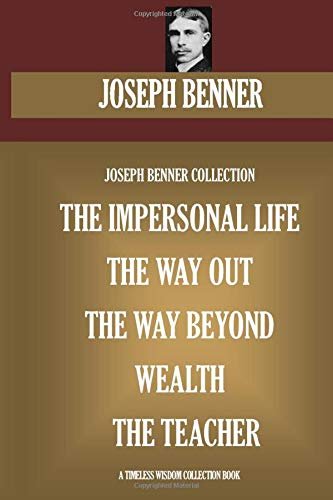
## 2. Joseph Benner
Joseph Benner is remembered most for *The Impersonal Life*, first published anonymously in 1914. Though brief in length, the book remains one of the most direct and unsettling spiritual texts of the last century. It does not explain divine reality from a distance. It speaks in the voice of the Divine within.
That choice alone makes the work extraordinary.
Benner bypassed the usual structure of spiritual instruction. There is no gradual persuasion, no elaborate theology, and no attempt to build authority through external proof. Instead, the text confronts the reader with the possibility that the deepest truth is already speaking from within consciousness itself.
This interiority is what makes Benner so enduring. He did not create a broad public movement. He did not become a household spiritual name. Yet his writing continues to circulate because it performs a rare function: it collapses distance. The seeker is not sent elsewhere. The search is brought inward immediately.
In this way, Benner shaped modern spirituality quietly but decisively. He helped reinforce a movement away from external dependency and toward direct inner realization. His obscurity in the wider culture only sharpens the force of his legacy.

hidden spiritual teachers and the quiet transmission of wisdom
## 3. Thomas Troward
Thomas Troward occupies a crucial place in the history of spiritual thought, yet his name is often missing from popular discussions. A judge by profession and a metaphysical thinker by vocation, he helped articulate one of the most influential ideas in modern spirituality: that consciousness is causative.
His lectures and writings, especially within the New Thought tradition, explored the relationship between mind, universal law, and manifestation with unusual rigor. Unlike more emotionally framed spiritual teachers, Troward wrote with disciplined clarity. He treated spiritual law as something precise, intelligible, and inherently rational.
That approach made his work foundational.
Many later teachings on manifestation, mental causation, and inner creation trace their roots, directly or indirectly, to ideas Troward expressed with remarkable coherence. Yet because he was not a flamboyant public figure, he rarely receives the broader recognition given to later popularizers.
Among forgotten spiritual teachers, Troward stands out as a thinker whose influence entered the bloodstream of spiritual culture without carrying his name along with it. His legacy survives every time modern spirituality speaks of thought shaping reality, whether readers know his work or not.
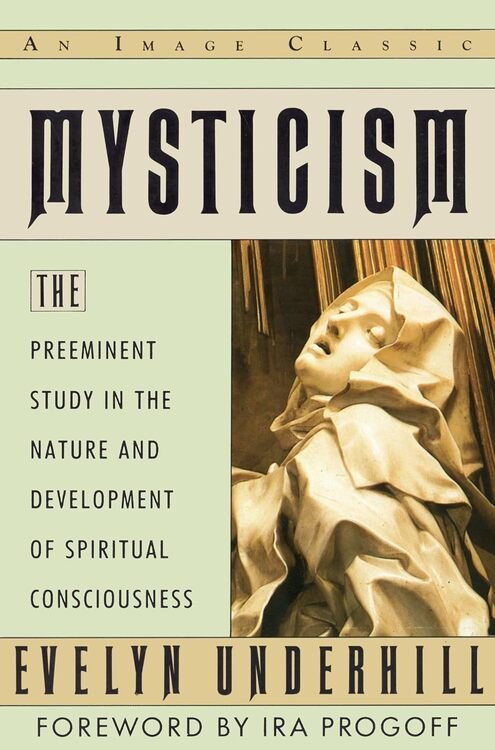
## 4. Evelyn Underhill
Evelyn Underhill brought mystical life into language that was both profound and accessible. Her most famous work, *Mysticism*, helped generations of readers understand the inner stages of spiritual awakening without reducing them to dogma or sentimentality.
At a time when mystical experience was often treated as either irrational or inaccessible, Underhill approached it with seriousness and clarity. She neither trivialized nor sensationalized the path. Instead, she presented the interior life as disciplined, real, and transformative.
This made her a rare bridge figure.
She connected scholarship and direct spiritual longing. She honored the great Christian mystics while speaking to a modern readership increasingly distanced from traditional religious structures. Her work validated the reality of inward transformation without requiring emotional spectacle.
Underhill’s name is respected in some circles, but she remains less known than many modern spiritual writers whose work lacks her depth. This is precisely why she belongs in a study of forgotten spiritual teachers. Her influence has been immense, yet quiet—moving through contemplative literature, retreat traditions, and spiritual formation without becoming a mass phenomenon.
## 5. Jacob Boehme
Jacob Boehme, the seventeenth-century German mystic and shoemaker, stands as one of the most astonishing examples of spiritual depth emerging from obscurity. He had little formal education. He held no institutional power. Yet his writings influenced philosophers, mystics, and esoteric thinkers for centuries.
Boehme wrote from direct visionary experience. His language can be difficult, symbolic, and at times overwhelming. Still, beneath that complexity lies a fierce spiritual intelligence grappling with the nature of God, creation, evil, freedom, and human transformation.
He did not write to simplify mystery. He wrote to penetrate it.
This distinguishes him sharply from more accessible spiritual teachers. Boehme demands patience. He asks the reader to think spiritually rather than merely conceptually. Yet those willing to meet him find a depth that reshapes how inner conflict, divine life, and cosmic process are understood.
Boehme’s influence spread through later Christian mysticism, German idealism, and esoteric spirituality. Even so, his name remains largely absent from popular spiritual culture. He belongs among forgotten spiritual teachers because his legacy is profound precisely where public awareness of him is thin.
## 6. Sri Nisargadatta Maharaj
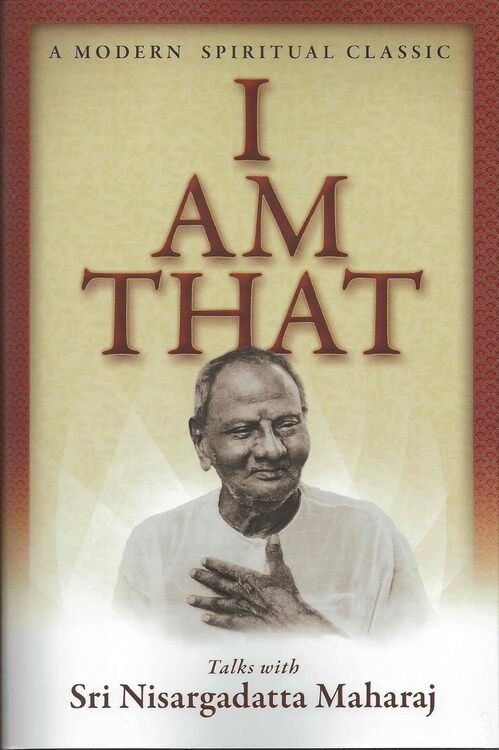
Sri Nisargadatta Maharaj is not entirely unknown, especially among serious seekers of nonduality. Yet compared with the power of his teaching, his broader recognition remains surprisingly limited. He was not a polished teacher, nor did he present himself as a spiritual celebrity. He was a cigarette shop owner in Mumbai who spoke with devastating directness about the nature of awareness.
His teaching stripped away almost everything secondary.
In *I Am That*, readers encounter a voice unconcerned with comfort, identity reinforcement, or spiritual theater. Nisargadatta repeatedly points beyond the personal self toward the pure sense of being prior to thought, memory, and form. The effect is not inspirational in the usual sense. It is clarifying, even disorienting.
That severity is part of his enduring value.
Among forgotten spiritual teachers, he represents a form of uncompromising transmission that rarely becomes mainstream because it offers no softness for the ego to hold onto. Yet for those ready for it, his teaching becomes unforgettable. It cuts through spiritual accumulation and brings attention back to awareness itself.
His influence now extends across modern nondual circles, often without full recognition of how deeply his clarity helped shape them.

## 7. Plotinus
Plotinus stands near the root of Western mystical philosophy, yet many modern spiritual readers have never encountered him directly. Living in the third century, he developed a vision of reality centered on the One—the ultimate source beyond form, thought, and division.
His work is not casual reading. It demands contemplation. However, its importance is immense.
Plotinus articulated a spiritual metaphysics in which all of existence flows from unity and longs to return to it. The soul’s task is not to acquire meaning externally, but to awaken to its origin through inward ascent. This vision profoundly influenced Christian mysticism, Renaissance thought, and later esoteric traditions.
Without Plotinus, much of Western interior spirituality would look different.
He belongs among forgotten spiritual teachers because his impact is foundational, yet his name has receded behind the traditions he helped shape. His influence is often inherited secondhand. Readers encounter his structure of thought without knowing its source.
In a culture that often imagines mystical philosophy as primarily Eastern, Plotinus quietly reminds us that the Western tradition also produced luminous maps of inner return.
## 8. Ramana Maharshi
Ramana Maharshi is revered by many serious seekers, yet he still remains less publicly known than his influence deserves. His teaching appears simple on the surface: ask, “Who am I?” Yet beneath that simplicity lies one of the most direct spiritual methods ever offered.
Ramana stripped the path down to essence.
He did not encourage elaborate metaphysical systems. He did not create a complex doctrine. Instead, he directed attention toward the source of the self-sense. The question was not philosophical curiosity. It was a means of dissolving false identity at its root.
This directness gave his teaching unusual longevity.
Readers and practitioners across traditions continue returning to Ramana because he offers something rare: a spiritual path that bypasses ornament and points immediately toward the center of awareness. His silence was as influential as his words. In that silence, many found confirmation that truth does not always need explanation.
Ramana belongs among forgotten spiritual teachers not because he lacked reverence, but because his quiet influence has often moved beneath mainstream spiritual culture while continuously shaping its most serious depths.
Section 3 — The Pattern Behind Forgotten Teachers Who Endure
Despite vast differences in era, language, and tradition, these forgotten spiritual teachers share recognizable qualities. The first is interiority. Their work points inward rather than outward. They do not rely on spectacle, institutional power, or personality-driven authority. Instead, they direct attention toward awareness, realization, and the transformation of perception itself.
Second, they simplify what others complicate. Some wrote dense texts. Some spoke with radical brevity. Yet all of them moved toward essence. Their teachings cut through secondary structures and return repeatedly to the central spiritual questions: What am I? What is real? And what separates the human from the divine, if anything? Also what remains when illusion drops away?
Third, they endure without demanding mass recognition. This may be the most striking pattern of all. Many public figures rise quickly because they fit the emotional or cultural needs of a particular moment. Forgotten spiritual teachers last because they speak to structures of consciousness that remain unchanged. Their influence spreads more slowly, but it often penetrates more deeply.
Another shared quality is freedom from self-promotion. These teachers did not all reject visibility, but none depended on performance to validate truth. Their work stands without constant reinforcement. In some cases, obscurity even preserved purity by protecting the teaching from dilution.
Finally, they awaken recognition rather than dependence. This may be the clearest sign of enduring spiritual influence. Readers do not simply admire these teachers. They experience shifts in perception through them. Something becomes clearer, quieter, or more real. The teacher disappears, and the seeing remains.
That is why these spiritual teachers continue shaping the inner world long after louder voices fade.

Conclusion — Why Quiet Transmission Outlasts Popularity
Popularity moves fast. Real spiritual influence rarely does.
The teachers explored here did not all share the same language, culture, or method. Some wrote from mystery. Some from devotion. And others from rigorous inward inquiry. Yet each one helped shape the spiritual landscape by speaking to what does not change in human experience.
That is why they endure.
Forgotten spiritual teachers remind us that transformation does not depend on fame. A teaching can move through centuries without becoming fashionable. It can reach thousands without becoming loud. It can reshape consciousness while remaining largely outside public recognition.
In many ways, this quietness protects the work. It prevents truth from becoming performance. It keeps transmission closer to experience and farther from branding. Most importantly, it allows the reader to meet the teaching directly, without being overwhelmed by personality or movement.
To recover these names is therefore not an exercise in nostalgia. It is a return to a deeper pattern of spiritual influence—one that values clarity over scale, realization over recognition, and permanence over visibility.
The world is often changed most deeply by what moves quietly through it. The same is true of the inner world.
FAQ SECTION
Why are some spiritual teachers forgotten over time?
Many profound teachers did not build public movements or seek fame. Their teachings often spread quietly through books, personal study, and direct spiritual influence rather than mass visibility.
What makes timeless spiritual teachers still relevant today?
Their teachings address timeless questions about identity, awareness, suffering, and inner freedom. Because those questions remain unchanged, the insights continue to resonate across generations.
Are overlooked spiritual teachers less important than famous ones?
Not at all. Some of the deepest spiritual influence has come through quiet figures whose names faded while their ideas continued shaping consciousness.
How do unremembered spiritual teachers differ from popular spiritual influencers?
They often focus more on direct realization and less on public recognition. Their work tends to endure because it is rooted in lived truth rather than personality-driven appeal.
Why do timeless spiritual teachers often avoid attention?
Many authentic teachers prioritize transmission over visibility. Their aim is to awaken inner recognition, not to build status or identity around themselves.
Can studying these teachers deepen spiritual growth?
Yes. Their teachings often strip away trends and return the reader to essential questions, which can lead to greater clarity and inner depth.