
Recorded Spiritual Events
For many people, spiritual books belong to one of two categories.
They are either symbolic stories meant to inspire the imagination, or they are devotional writings meant to strengthen belief.
Most readers approach them with emotional or philosophical expectations, not with the expectation that reality itself may be questioned.
Yet some books create a very different reaction.
They do not simply comfort the reader.
They disturb the structure of ordinary thinking.
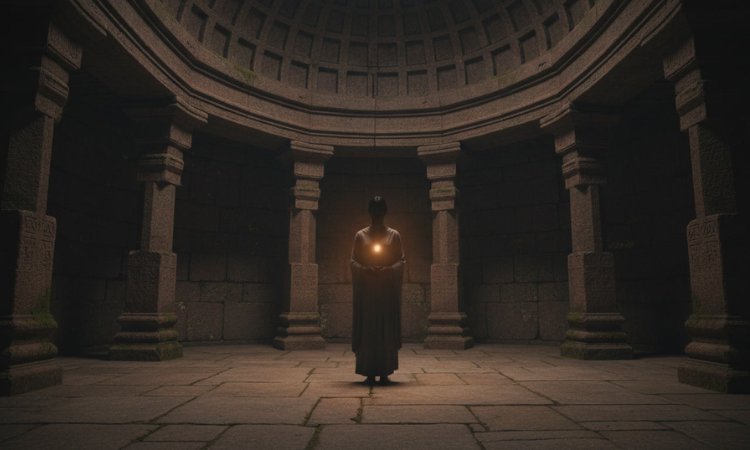
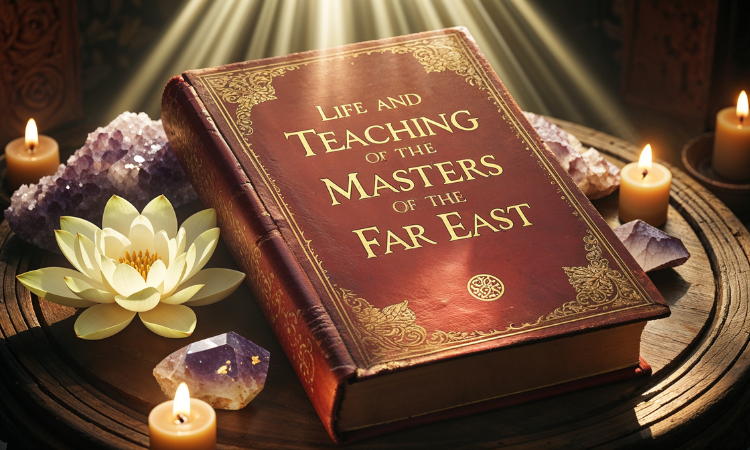
*Life and Teaching of the Masters of the Far East* belongs to that category.
Not because it contains mystical language. Spiritual literature throughout history has always described extraordinary experiences. What makes these recorded spiritual events so unusual is the atmosphere surrounding them.
Again and again, the people witnessing the events react as though they are not observing violations of law, but demonstrations of a higher law that most human beings have forgotten.
That distinction matters.
Because fantasy can be dismissed safely. Myth can be admired from a distance. Symbolic stories can remain emotionally interesting without changing how someone understands life itself.
But if even one of these recorded spiritual events points toward a deeper principle of consciousness and reality, then a much more uncomfortable question appears:
What if modern humanity misunderstands the nature of human potential?
That possibility is precisely why these teachings continue to provoke debate, fascination, skepticism, and deep spiritual curiosity decades after they were first published.

Why the Masters Did Not Present Themselves as Supernatural
One of the most important aspects of the series is often overlooked.
The Masters are not portrayed as performers. They do not seek worship, admiration, or authority over others.
In fact, they repeatedly direct attention away from themselves and toward a divine principle they claim exists within every human being.
That changes how the reader experiences the books.
If the Masters had claimed exclusive power, the events could remain distant and irrelevant to ordinary life. Readers could simply categorize them as rare mystical beings and continue living exactly as before.
But the deeper message is far more provocative.
The books repeatedly suggest:
* the power is not outside man
* the divine is not distant
* consciousness is not passive
* spiritual law is not reserved for a chosen few
This is where the recorded spiritual events become philosophically disruptive.
Because the question stops being:
“Could extraordinary things happen?”
And becomes:
“What if humanity has forgotten something essential about consciousness itself?”
I explored the deeper meaning behind Life and Teaching of the Masters of the Far East further in this detailed reflection on the books and their enduring spiritual impact.
The Relationship Between Consciousness and Reality
Throughout the series, physical conditions appear to respond to inner states of consciousness.
Food appears where lack was expected.
Healing occurs where weakness seemed final.
Fear dissolves in the presence of certainty.
Circumstances shift in ways that challenge ordinary assumptions about matter and limitation.
But perhaps the most fascinating detail is the emotional atmosphere surrounding these moments.
The Masters do not react with strain.
They do not appear desperate.
And they do not force outcomes through tension.
They do not operate from panic or fear.
Instead, the events unfold through calmness, stillness, certainty, and alignment.
This creates a sharp contrast with modern culture.
Most people are taught that change happens through pressure, struggle, anxiety, and relentless effort.
Yet the Masters seem to demonstrate a different relationship with reality entirely.
They do not appear to fight life.
They cooperate with a deeper order until life expresses that order outwardly.
That is a radically different understanding of power.
Why Stillness Was Treated as Authority
Modern spirituality often treats stillness as relaxation.
The teachings in these books treat stillness very differently.
Stillness is presented as authority.
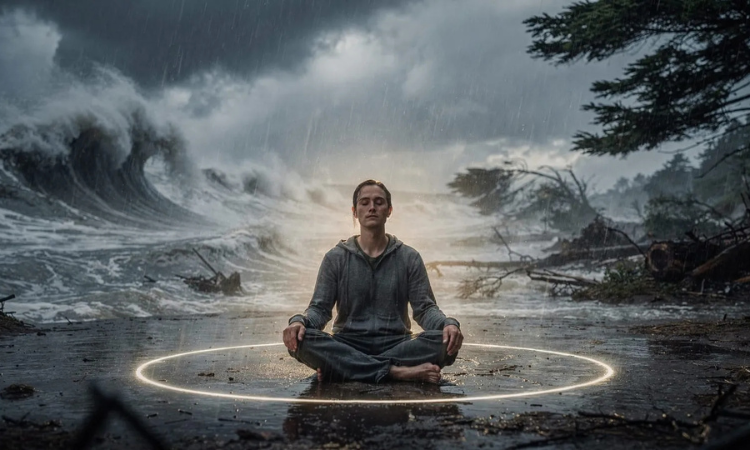
When threatening conditions appear, the Masters remain inwardly centered. And when lack appears, they do not emotionally surrender to lack. Also when fear arises around them, they do not mirror fear back into the situation.
They appear to recognize another reality beneath visible appearance.
This is one of the deepest themes running through the series:
The visible condition is not always the final truth.
That idea alone can completely alter the way someone lives.
Most human beings identify immediately with appearances. If the body weakens, weakness becomes identity. Also if life becomes uncertain, uncertainty becomes identity. While if fear appears, fear becomes truth.
The Masters acknowledge appearances without allowing appearances to define reality itself.
This is not denial.
It is mastery of perception.
And perception may carry far more creative influence than modern thinking comfortably accepts.
The Forgotten Idea of Divine Law
One reason these teachings continue to challenge modern thinking is that they refuse to separate spirituality from daily life.
The Masters do not present divine law as something abstract, symbolic, or reserved for religious ceremony.
They describe it as active, immediate, and continuously present.
Not someday.
Now.
Not after death.
Here.
This shifts the meaning of prayer, faith, healing, and even identity itself.
In ordinary thinking, prayer often becomes emotional pleading directed toward a distant God.
In these teachings, prayer appears more like alignment with an already-present reality.
That is why the books echo scriptural ideas such as:
“The Kingdom of God is within you.”
Not beyond you.
Not outside you.
Within.
If that statement is true, then the human problem is not necessarily the absence of divine presence.
The problem may be that attention has become completely absorbed by external appearances.
People search endlessly in systems, status, approval, information, money, and identity while ignoring the possibility that the deeper source of power already exists within consciousness itself.
That is what makes the teachings deeply confrontational.

Why Doubt Was Not Seen as Wisdom
Modern culture often praises doubt as intelligence.
The Masters appear to see doubt differently.
In these teachings, doubt is treated as divided power.
It is the mind saying yes and no simultaneously.
It is inner contradiction. Also it is consciousness moving in opposing directions at once.
Nothing stable can emerge from that condition.
This does not mean the books encourage blind belief or the rejection of discernment. Instead, they repeatedly emphasize inward unity.
The Masters appear inwardly undivided.
Their thought, feeling, word, and action move together. Their calmness comes from alignment rather than emotional suppression.
Most people live in fragmentation.
They think one thing.
Feel another.
Say another.
Do another.
Then wonder why life itself feels scattered and unstable.
The books quietly suggest that when consciousness becomes inwardly unified, reality begins responding differently.
That idea may sound mystical, yet modern psychology increasingly recognizes the powerful relationship between perception, expectation, emotional state, and physical experience.
The Masters simply push the principle much further than modern thought usually allows.
Why These Recorded Spiritual Events Still Matter Today
Many readers will reject the books completely.
Others will interpret them symbolically. Some will see them as mystical testimony. Others will approach them as spiritual philosophy expressed through narrative form.
Yet regardless of interpretation, the recorded spiritual events continue to matter because they challenge ordinary assumptions about human limitation.
That challenge is valuable.
Modern society suffers from a strange contradiction:
Humanity has accumulated enormous external knowledge while remaining internally restless, fearful, and fragmented.
People are flooded with information yet often disconnected from meaning.
They repeat spiritual ideas while still feeling powerless.
They pursue success while remaining inwardly exhausted.
Then a series like this appears and quietly suggests something radically different:
The answer is not more noise.
Another answer is realization.
Not performance.
Not endless theory.
Realization.
The kingdom is within.
Be still and know.
Think from the heart.
Speak from truth.
Live from the divine center.
The books insist these are not merely poetic ideals.
They are laws of consciousness.
That is why the teachings continue disturbing modern thinking. They suggest spirituality was never meant to remain decoration or inspiration alone.
It was meant to become demonstration.
A renewed mind.
And a quieter nervous system.
Then a restored inner authority.
A consciousness no longer entirely ruled by fear.
I also explored many of these extraordinary accounts and their implications more deeply in the long-form Timeless Teachings video series inspired by the books.

The Most Dangerous Idea in the Series
Perhaps the most unsettling idea in the entire series is not that extraordinary events occurred.
The most unsettling idea is that the Masters claimed the same divine principle exists within every person.
If that is true, then the distance between ordinary man and awakened man is not God’s absence.
It is consciousness.
Recognition.
Practice.
Alignment.
The willingness to stop living entirely from appearances and begin living from a deeper source within.
This possibility forces the reader into a very personal confrontation.
Because eventually the question is no longer:
“Did these things happen?”
The deeper question becomes:
“What would change in my own life if I truly lived as though divine law were real?”
Would fear still dominate so easily?
How can lack still define identity?
Would prayer still feel like begging?
Or silence still feel empty?
Would consciousness still appear powerless?
Those questions are not theoretical.
They reach directly into daily life.
Conclusion Recorded Spiritual Events
According to ordinary assumptions, many of these recorded spiritual events should not exist.
Provision appearing where there was none.
Healing responding to spoken truth.
Matter behaving as though consciousness carries authority.
Fear dissolving in certainty.
Stillness influencing conditions.
These events challenge the limits of accepted thinking.
Yet perhaps the real value of the books is not whether every reader accepts the events literally.
Perhaps their value lies in the questions they awaken.
Because throughout history, many truths appeared impossible before they were understood.
The Masters of the Far East continue standing in that uncomfortable territory between myth and possibility, symbolism and reality, philosophy and direct experience.
And maybe that is precisely why the books still matter today.
They disturb the surface.
Also they challenge assumptions.
And reopen forgotten questions about consciousness, reality, and human potential.
Sometimes one powerful question is enough to begin an entirely different way of seeing life.
And perhaps that is where the true teaching begins.